The 30-Second Cherry Routine That Finally Stopped My 3 AM Wake-Ups
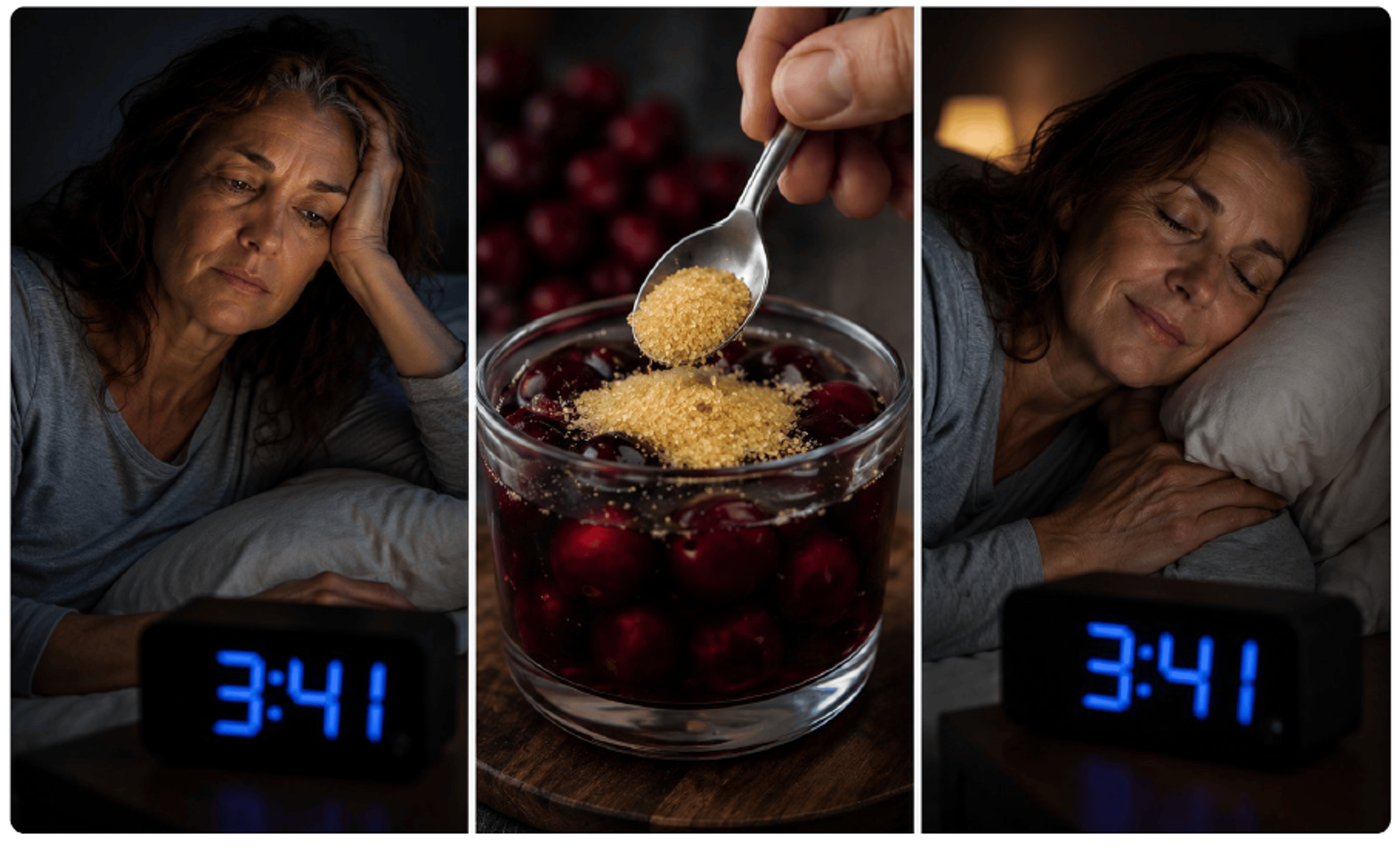
Takes about 3 minutes · no sign-up required
I was 54, and I hadn't slept through a single full night in over two years.
It wasn't that I couldn't fall asleep. That part was fine. The problem started after I was already asleep.
2:51 AM. Wide awake. Heart already going a little too fast.
3:34 AM. Same thing.
4:12 AM. Lying there doing the math on how many hours of "real" sleep I had left.

3:14 AM. Again.
My mind would just turn on the second I woke up — work, my kids, money, things I forgot, things I wished I'd said differently years ago. None of it mattered at 3 AM. All of it felt urgent at 3 AM.
I told myself it was just "part of getting older." Everybody says that, right? So I didn't think of it as a real problem. I figured it was just something I had to live with.
So I did what most people do. I started taking melatonin.
3mg at first. It helped, a little, for a while. Then it stopped working, so I went to 5mg. Then 10mg.
Here's the part nobody warns you about: the more you take, the more your body seems to need — and the next morning gets worse, not better.
I was waking up groggy. Foggy. Like my brain hadn't fully turned back on yet, even by 10 AM. And I was still waking up at 3 AM. The melatonin wasn't fixing my nights. It was just wrecking my mornings on top of it.
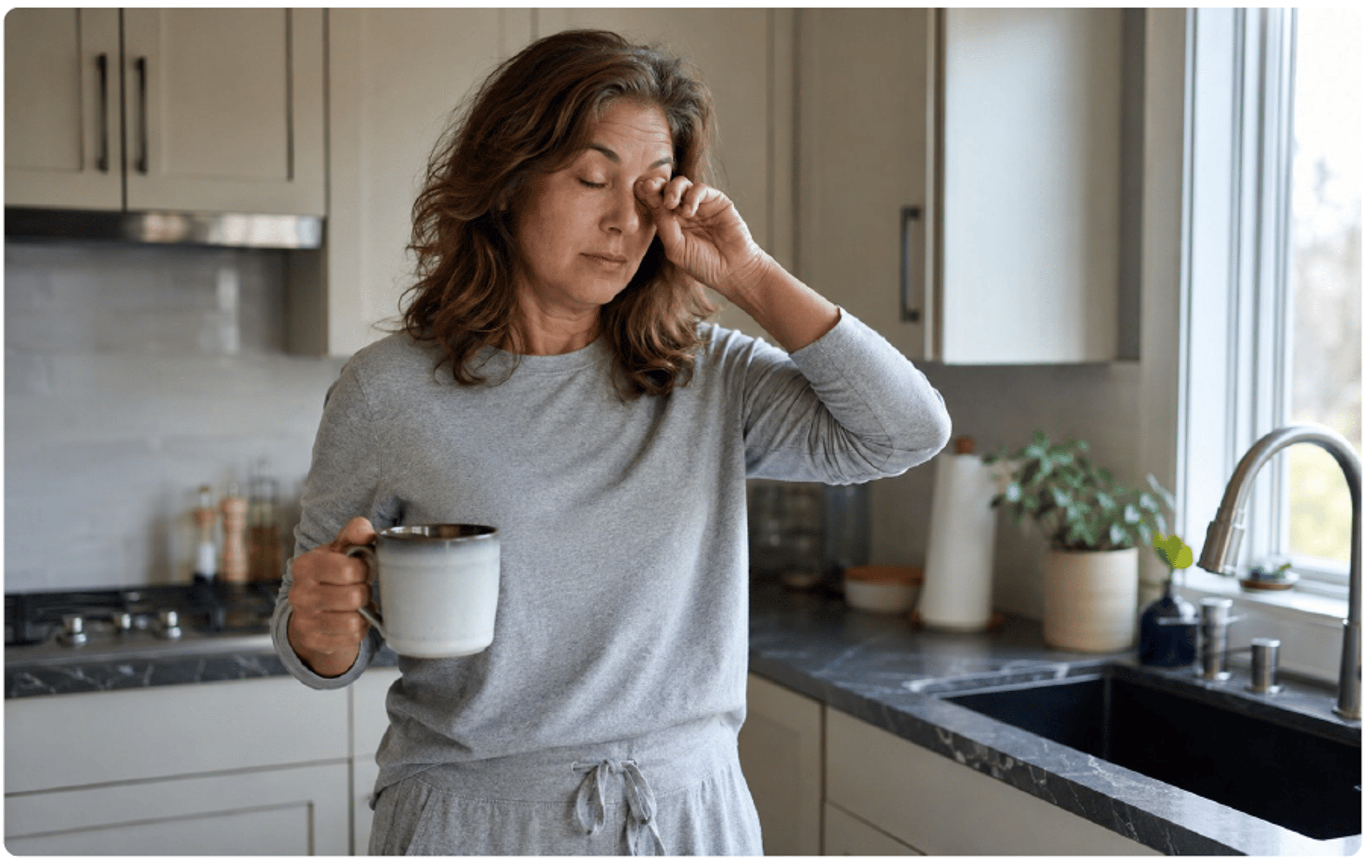
Another groggy morning that coffee couldn't fix.
By 8 PM most evenings, I'd already feel a knot forming in my stomach. Because I knew what was coming. Another ceiling. Another few hours of staring into the dark while my husband slept beside me, completely unaware.
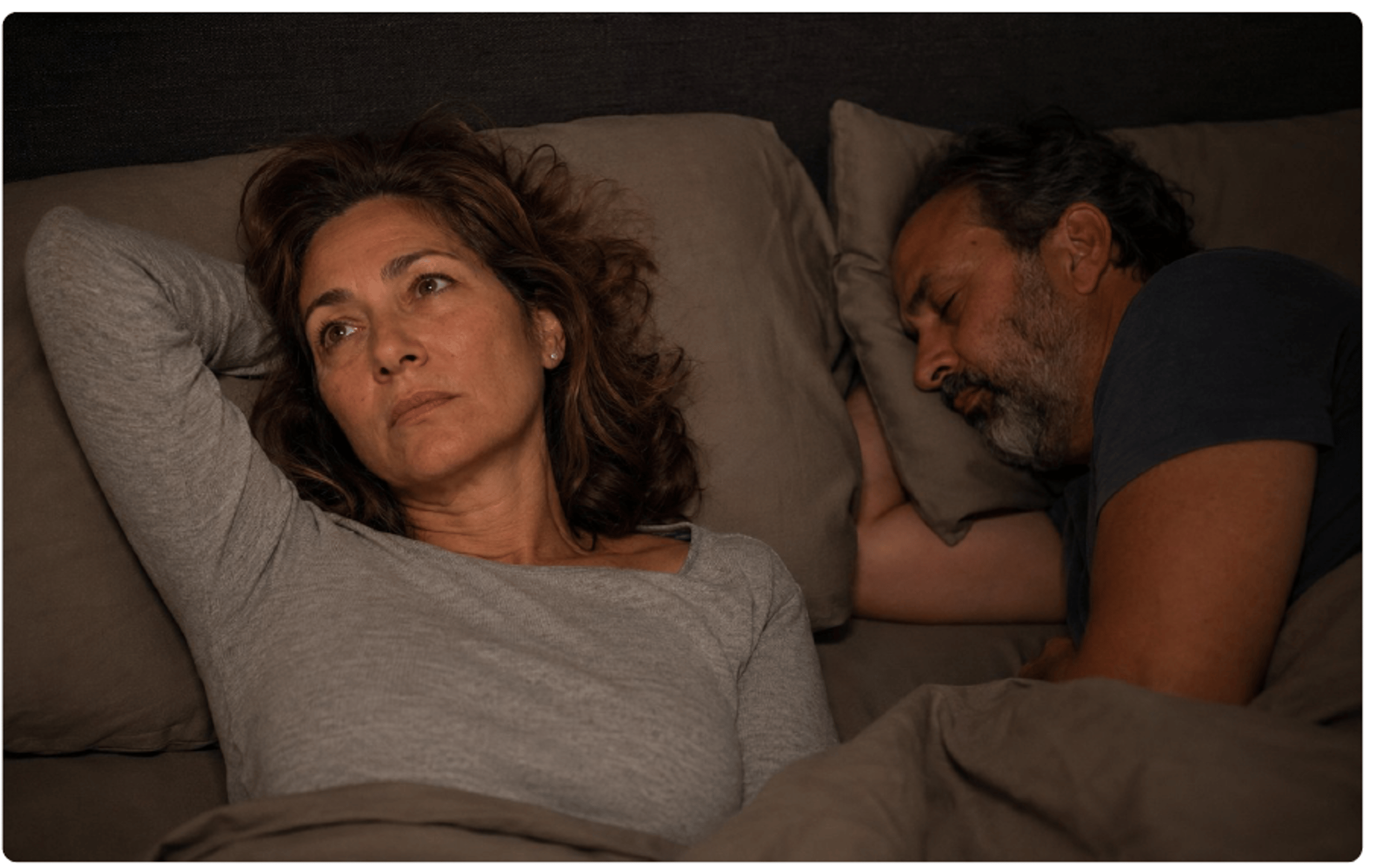
Wide awake, while everyone else slept.
I'd been stuck like that for almost three years when a friend — half-joking — mentioned something she called "the 30-second cherry routine."
I'll be honest, I rolled my eyes a little. I'd tried everything. But I was tired enough — in every sense of that word — to give one more thing a shot.
- Waking up around 3 AM, almost like clockwork
- A mind that won't stop racing once you wake
- Mornings that feel foggy, heavy, or slow to start
- Feeling like sleep meds help less every month
Free presentation · takes about 3 minutes to
watch
So that night, about 30 minutes before bed, I gave it a try.
I'm not going to dress this up and make it sound more dramatic than it was. It just felt like someone reached over and turned the volume down on my brain. The racing thoughts got… quiet. Not gone, exactly. Just quiet enough that I could actually drift off.
And I did. Not after an hour of staring at the ceiling. Just — sleep.

The first full night's sleep in years.
I woke up the next morning and checked my phone before I even sat up: 6:48 AM. I'd slept straight through. No jolt awake at 3. No clock-watching. I actually checked to make sure my alarm hadn't silently failed, because it felt that unfamiliar.
About 30 minutes before bed — a small, cherry-based evening pour, taken on its own.
No timer, no ritual — just part of winding down, same as brushing your teeth.
Most people notice a difference within the first few nights — not weeks of "waiting to see."
I kept doing it every night. And every morning, I woke up feeling something I genuinely hadn't felt in years: rested. Not "fine." Not "I'll survive today." Actually rested.

"I got my wife back."
My energy came back first. Then my mood. Then my patience — with my kids, with my husband, with myself. My husband said something to me about six weeks in that I still think about: "I got my wife back."
One more thing happened that I wasn't expecting, and it took me a while to connect the dots.
Around week six, I went to pull on a pair of pants I hadn't worn since a wedding the year before. They'd fit perfectly the last time I wore them. They were loose. Not "lost a few pounds" loose. Noticeably loose.
I hadn't changed how I was eating. I hadn't started exercising more. The only thing that had changed was my sleep.
Out of curiosity, I started reading up on it, and turns out that's not as random as it sounds. Poor sleep keeps your stress hormone, cortisol, running high — and cortisol is closely tied to where and how easily your body holds onto weight, especially around the middle. Deep, uninterrupted sleep is also when your hunger hormones reset properly. I'm not a doctor, and I'm not claiming this was some dramatic metabolic transformation. But it made a lot more sense once I realized my body had just been running on broken sleep for three years — and once that got fixed, a few other things quietly started fixing themselves too.
I wasted almost three years on melatonin that made my mornings worse without fixing my nights. Three years of feeling like a zombie. Three years of dreading 8 PM because I already knew what the night had in store.
I'm not telling you this because I think my situation is special. I'm telling you because if you're reading this at, say, 3 AM yourself, with your mind racing and the clock just sitting there mocking you — I know exactly what that feels like, and I wish somebody had shown me this sooner.
So if any of this sounds familiar, I'd just ask you to look into it. That's it. Just look.
No sign-up required
Sweet dreams,
Marie
Disclaimer: This is an advertorial, not an actual news article. It reflects one individual's personal account and is shared for illustrative purposes. Results are not typical and will vary from person to person. By proceeding, you agree to the linked offer's terms and conditions.
This page is for informational purposes only and is not medical advice. Sleep difficulties can have many causes, including stress, diet, lifestyle, medications, hormones, and underlying health conditions. Always consult a qualified healthcare professional before making changes to your wellness, sleep, or supplement routine, especially if you have an existing medical condition, are pregnant or nursing, or are taking medication.
This product and the statements on this page have not been evaluated by the Food and Drug Administration. This product is not intended to diagnose, treat, cure, or prevent any disease. Typically, weight changes are influenced by many factors including diet, activity level, sleep, and individual health status.
Some links on this page are affiliate links. We may earn a commission if you make a purchase through them, at no additional cost to you. Names and identifying details have been changed to protect individual privacy. This page is not affiliated with or endorsed by Meta Platforms, Inc.